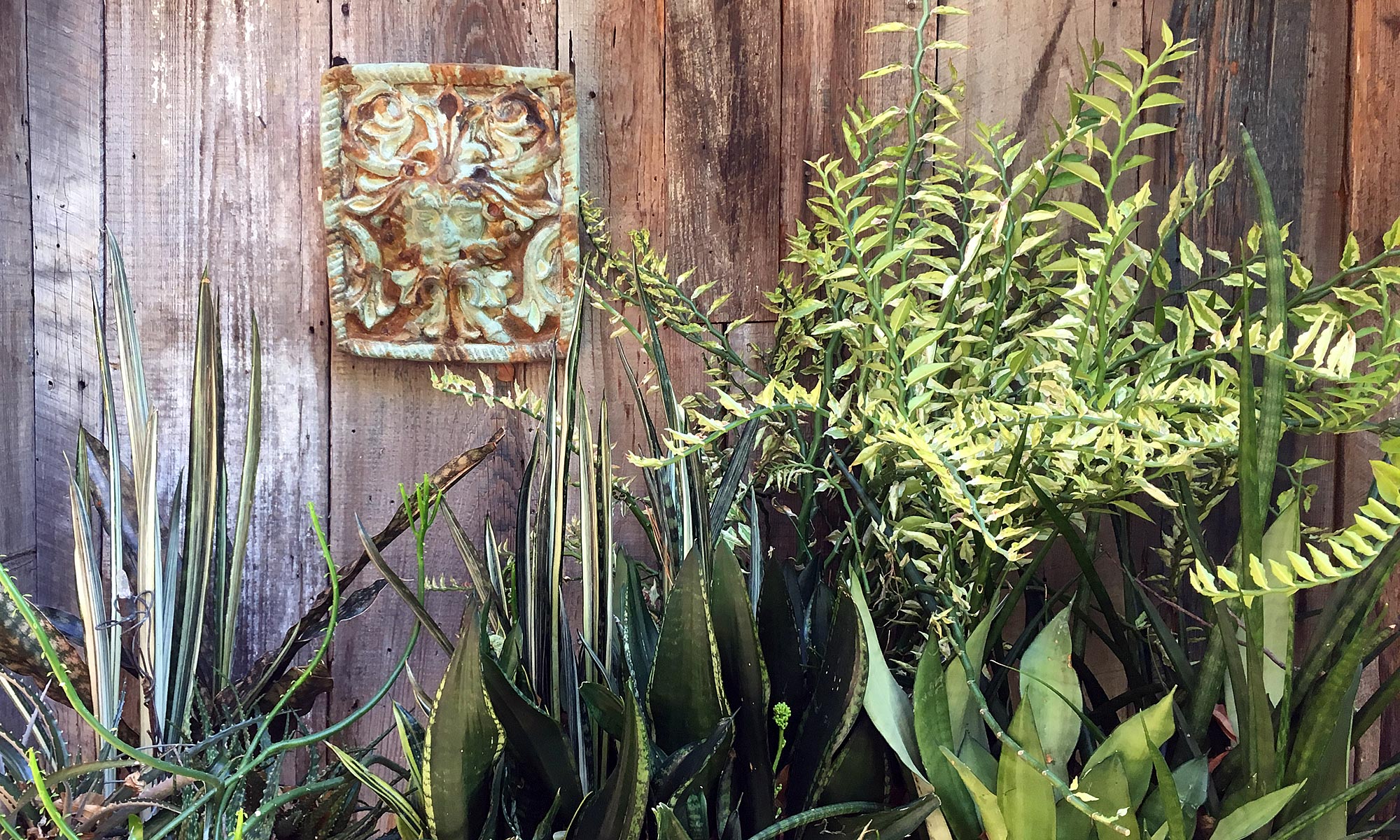

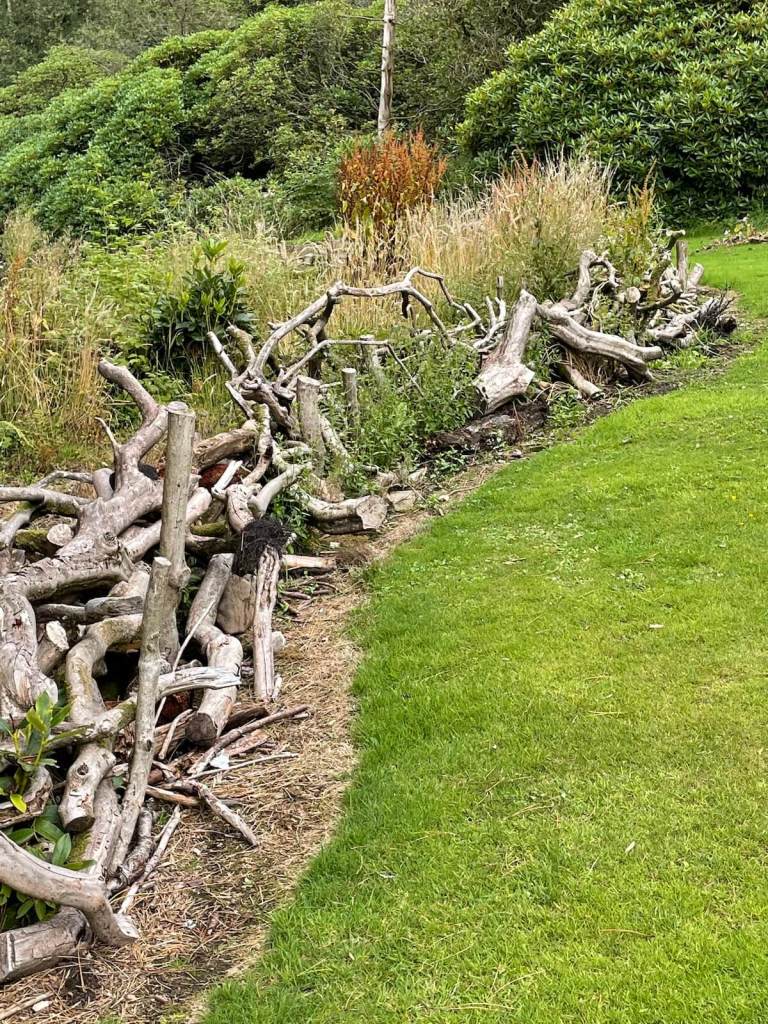
I have a deliberate long, low brash pile alongside a fence that makes cleaning up the garden convenient while saving space at the landfill. And it teems with beneficial wildlife.
And yeah, I wrote brash, which is the actual term for piles of branches, twigs, leaves, weeds, and other garden trimmings. We often call it brush because, well, we repeat words we have always heard, right or wrong. A newly-popular word for this is hügelkultur, or “mound gardening” in which compostable logs, limbs, leaves, and other debris are piled up and decompose into rich soil. Just like in nature, only more orderly.

Mine started after an ice storm left a lot of fallen tree debris everywhere, which I dragged alongside a fence and have simply added to over the years. Following the Alice’s Restaurant theme of “one big pile is better than two little piles” it just became the place to toss stuff too large for my usual compost pile.
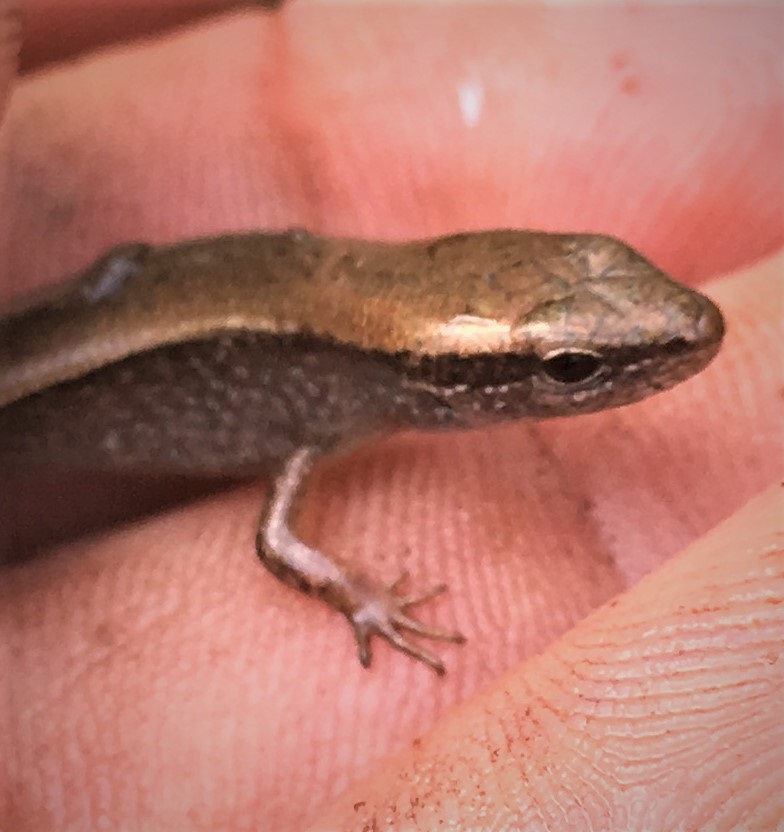
The long, low feature teems with all sorts of critters, from lightning bugs and other beetles to “roly-poly” pillbugs, slugs, spiders, native solitary bees (the powerhouse pollinators of my garden, which nest in holes they drill into logs), toads, tree frogs, several species of lizards, nesting birds, and so much more – even woods gnomes. And yeah, the occasional beneficial non-venomous snake that keeps things in check (what, you okay with the slugs and mice?). All are as happy as can be, and my garden is richer for them all.


Not to everyone’s liking, I’m sure, but my garden is large enough to accommodate it. And, being a gardener who takes responsibility for my own yard refuse, I’m loath to haul stuff to the curb when it can actually be put to work. As long as it is in one place, it looks fine, and things seem to work out.

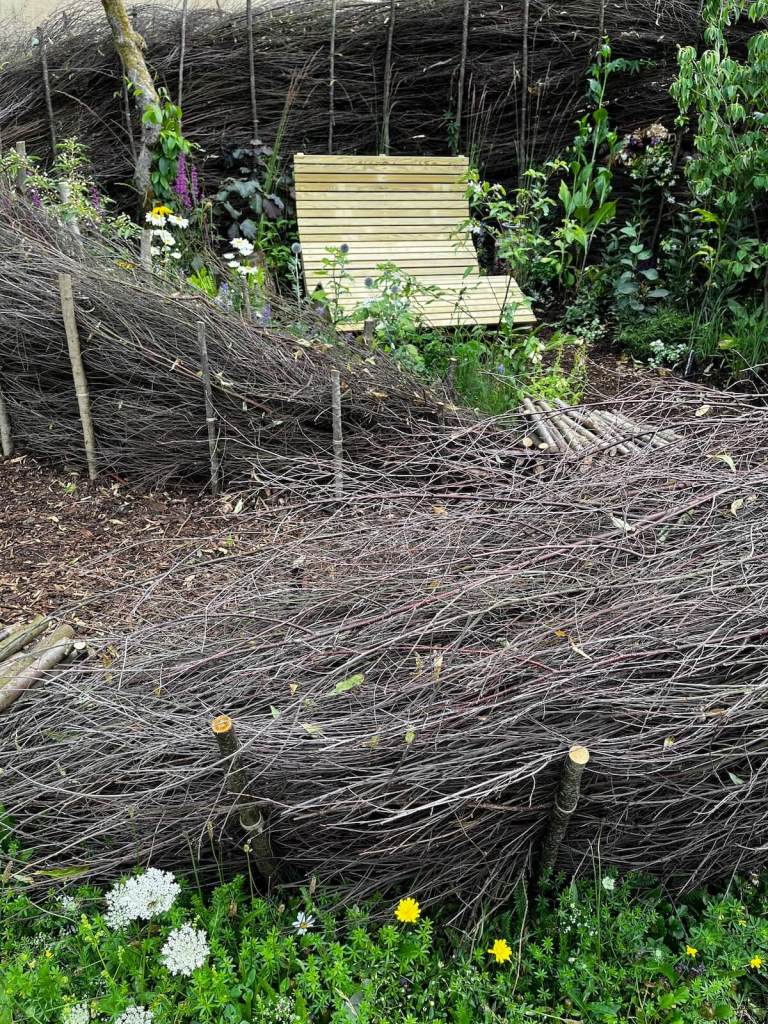
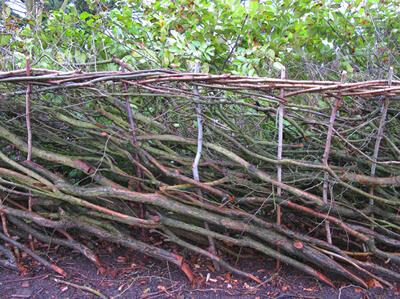
An ancient and common garden construction (and currently one of the most popular themes in Royal Horticulture Society flower shows) is the “dead hedge” – a long, narrow wall made of limbs, long branches, and vines woven between vertical stakes cut from trees or shrubs. Traditionally used as low fences and enclosures, a dead hedge is actually just somewhere between a traditional split rail fence and a more tightly woven wattle.

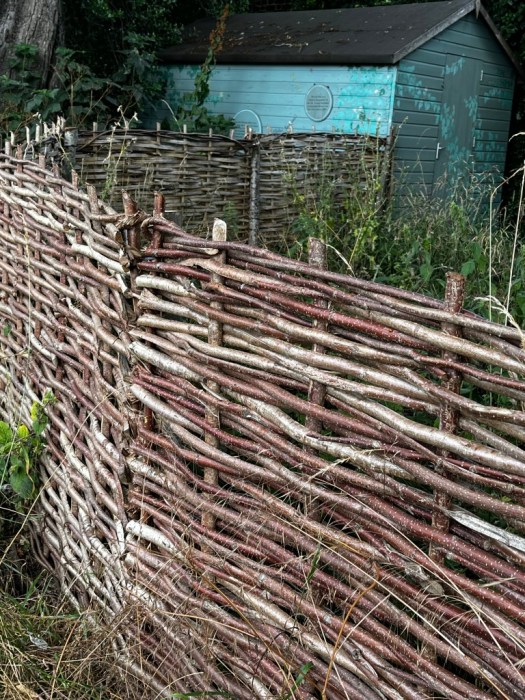

Maintaining a dead hedge is an ongoing, year-round activity; as I tidy up the garden I drag my tarp of fallen limbs, shrub prunings, or tall weeds and stack/tuck them wherever they fit.
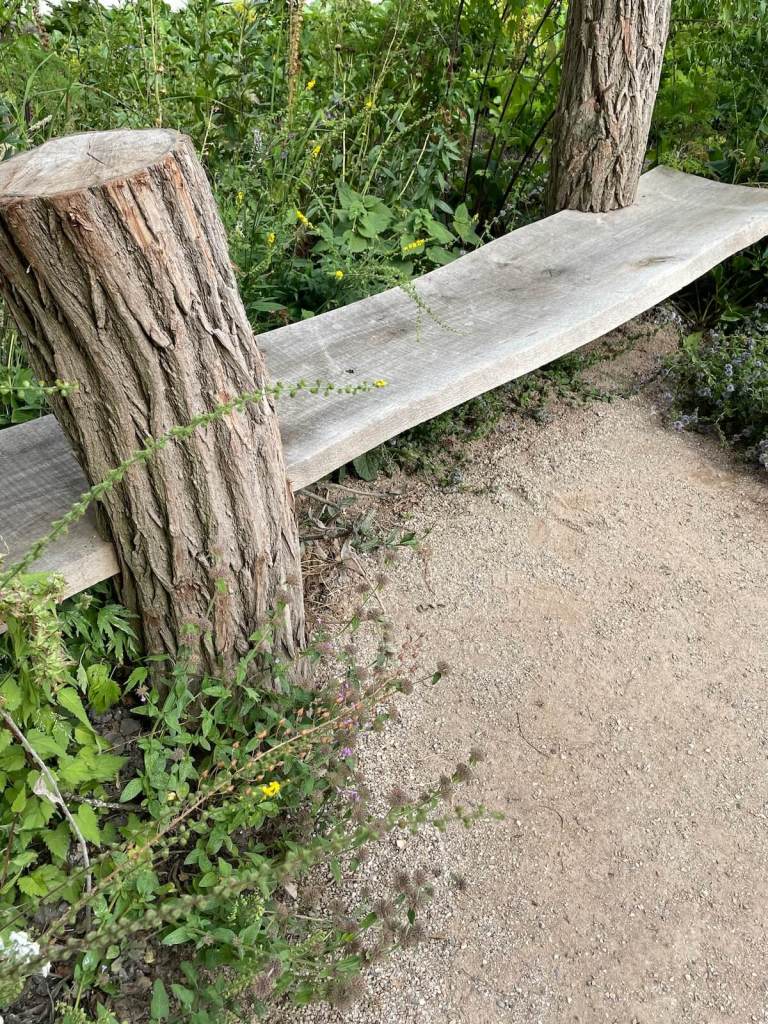
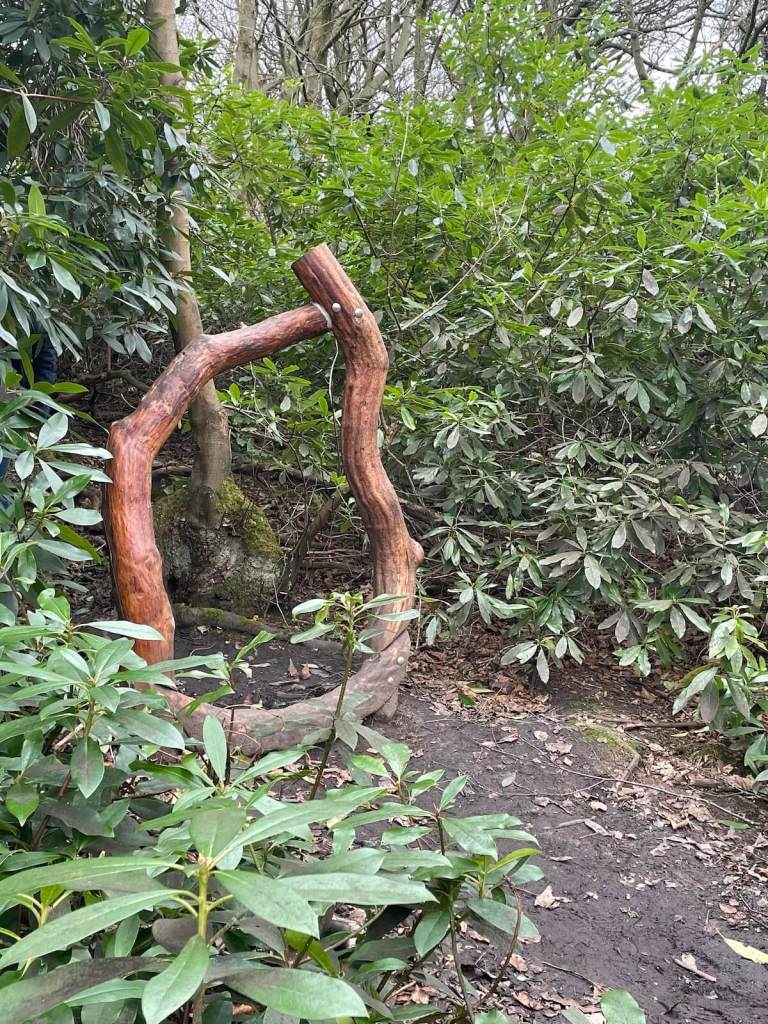
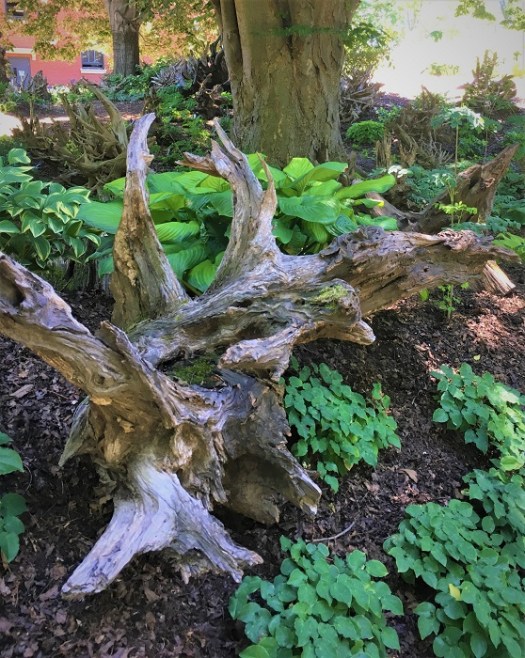
This is also an easy way to accent a shaded garden, especially if you include old stumps and logs for moss, lichens, and fungi to grow on. A rustic bench here, a teepee of limbs there, a stump or two for accent, and this naturalistic theme can add a year-round woodsy touch for any garden. While saving space at the landfill, and making a garden truly wildlife friendly.






Note: Another creative use for stumps, logs, and limbs is the “stumpery” – click here.
 Felder Rushing's Blog
Inspiring! We have 3 Water Birch in our yard that continually drop limbs. This is a great alternative instead of throwing everything on the burn pile. Thank you!
LikeLike
yes!!
LikeLike
WOW! Some kind of COOL Mr. Rushing! Thank you for sharing. ________________________________
LikeLike
Inspiring! We have 3 Water Birch in our yard that continually drop limbs. This concept will make a nice alternative to our burn pile and a nice addition to our garden. Thank you!
LikeLike
This may be my favorite post ever! Now just to convince my husband we need one of each of these!
LikeLike
Felder, it’s quite unique and I rather like it! It can be rather expressive and take on a life of it’s own.
Your creativity never ceases to amaze me!🌱🌿🪴
LikeLike
just sharing what others have shown ME!
LikeLike
Great ideas, all! I’m particular fascinated by stumperies. I recently saw one at Bedrock Gardens in New Hampshire. As we would say in Maine, the stumpery is wicked cool.
LikeLike
they are so common in english gardens… largely because no one has ever set up a system for hauling away garden debris, and so many gardens here are many generations old…
LikeLiked by 1 person
I love the tree bench, Felder, and have the perfect spot for one between two aspens in our backyard. Keep the ideas coming!
LikeLike
most welcome, cuz-in-law! hugs to sir sam
LikeLike
Does this increase the risk of termites if within a few feet of your home? We do have termite bait stations around and covered by a contract but I would love to do this in the fairly narrow area with a slope to slow down run off.
LikeLike
not significantly. there are tons of small critters that live in brash piles that eat termites like candy. only a big problem up against a larger structure.
LikeLike
We have always had piles of various size branches we pick up all year long for wildlife shelters and they are great but your idea of one that works like a fence is intriguing. Definitely will give this idea a try.
LikeLike
commonly done in england. just a row instead of a pile…
LikeLike
Just wondering about the termites it will attract.
LikeLike
to some extent, it can. but usually only in larger logs, in which case there are TONS of other critters (including ants, beetles, and lizards) that slurp termites like chocolate cake. food chain and all that. not a big problem unless the stuff is piled deep against a structure, which these are not.
LikeLike
I LOVE it!! Thank you for so many great pics to get the mind imagining. My husband will be glad to hear this… less on the burn pile! Thank you so much!
LikeLike
What to do with all the fallen trees
LikeLike
Johnny your Wood stack compost sculpture is exactly what I need on my place!! I’ll show it to my brother TJ and hopefully he can help me with it. Thanks for sharing!
LikeLike
Particularly loved this article, Felder. Attractive ways to deal with big wood and branches in an environmental way. Suzanne from Down Under
LikeLike
my pleasure, learning and sharing! cheers from the misty moors of lancashire
LikeLike
This is a very creative idea. Having grown up in the country many years ago, I have seen these structures but you reminded me of them.
LikeLike
I like this idea if I can figure out how to incorporate it and get my husband on board. But I do have a question — does it create a fire hazard in the yard? Not that it would be any more so than our current “burn pile” that never manages to get burned!
LikeLike
not a fire hazard. just a wall of sticks and stuff.
LikeLike
I love these brash piles and “dead hedges”, that are anything but dead, but teaming with life! Thank you Felder for showing how lovely they are. We have had brush piles of various sizes and duration over the years, and I think neighbors, at best, tolerate them. The thought of snakes (which we welcome!) and rodents (I can empathize with them re. rodents, but I’ve never noticed a major increase) makes them nervous. Birds, summer wild roses, and fall goldenrod and ironweed of the brush pile have given us great pleasure.
LikeLike