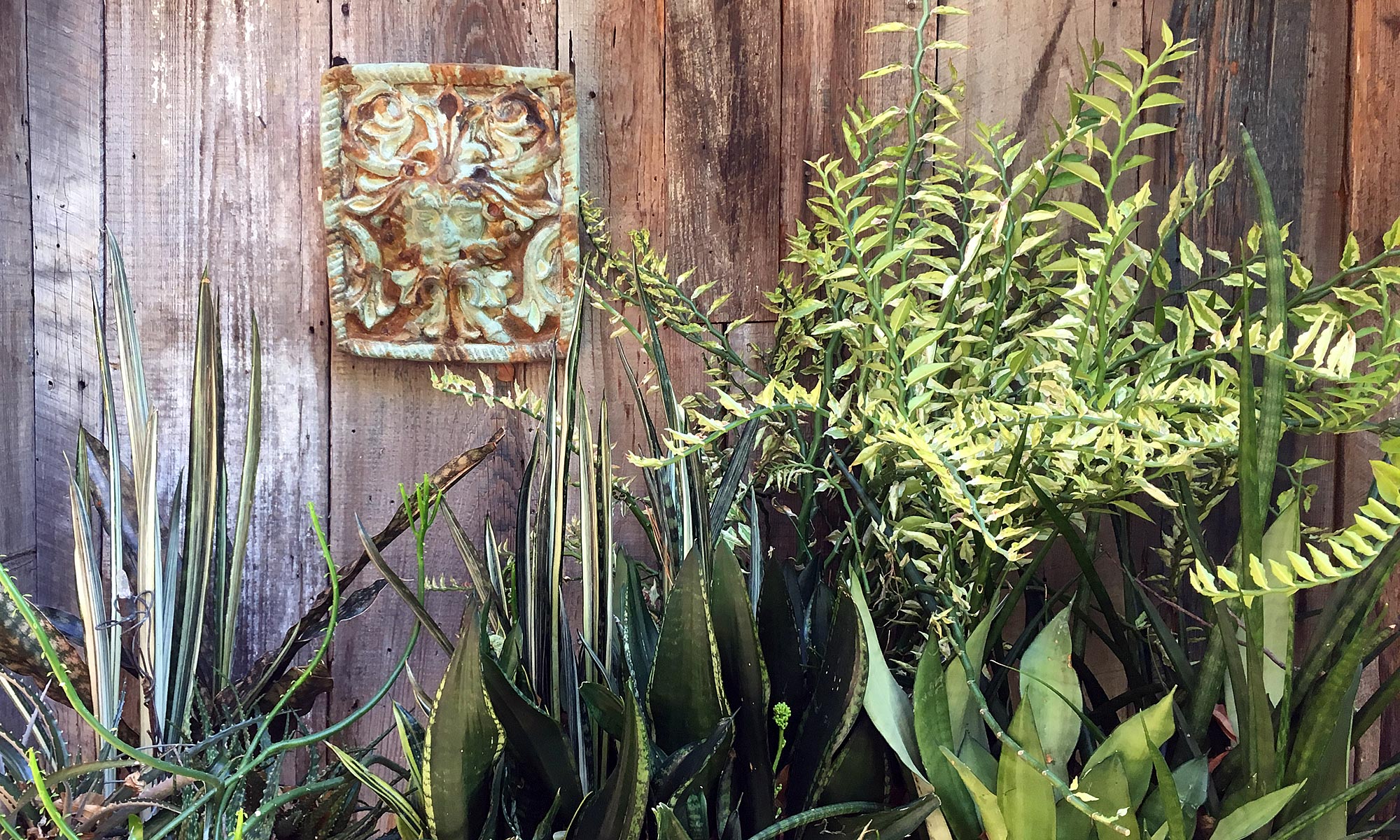
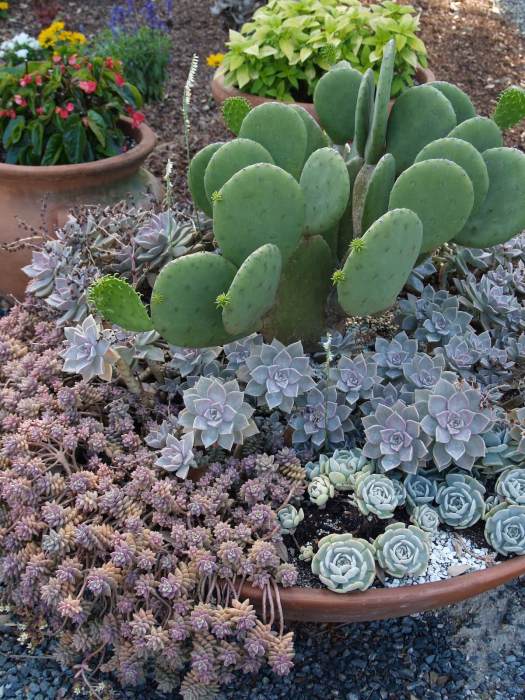
Unusual. Strange. Odd. Peculiar. Weird. Bizarre. Phantastic. All good starting points for members of my fav group of plants.
Starting when I was just five years old, I have amassed a smorgasbord of cacti and other succulents. Of all the plants this horticulturist has collected and grown over the decades, these are the ones that have, er, “stuck with me” in spite of my neglectful ways.
Earliest Plant Memories
Honest – my earliest-ever memory of a specific plant is from when I was just a kid, and a prickly shrub with yellow flowers exploded my brand-new inflatable beach ball; I also remember Mom gaslighting me with how it was the fault of the wind – her cactus was blameless.
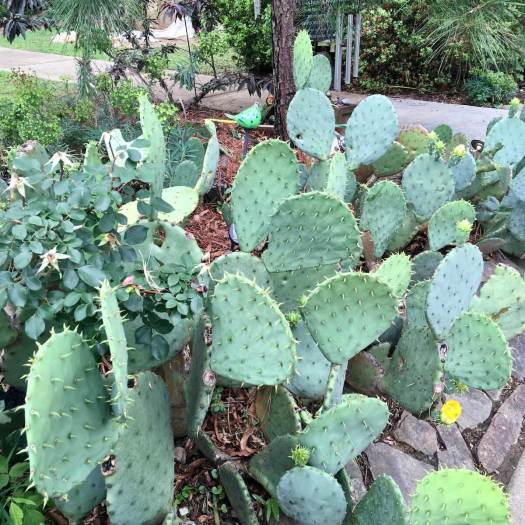
Later, during a fifth-grade school assignment on growing plants, I peddled my bicycle to a nearby garden center where the generous owner gifted me a potted miniature version of mom’s prickly pear. Barely a dozen years later while working in a garden center in south Texas, a Latino co-worker shared a potful of an unusual species of the familiar “mother-in-law tongue” or “snake plant” called Sansevieria (now renamed Dracaena, which I deeply resent), which I still grow and share some half a century later.
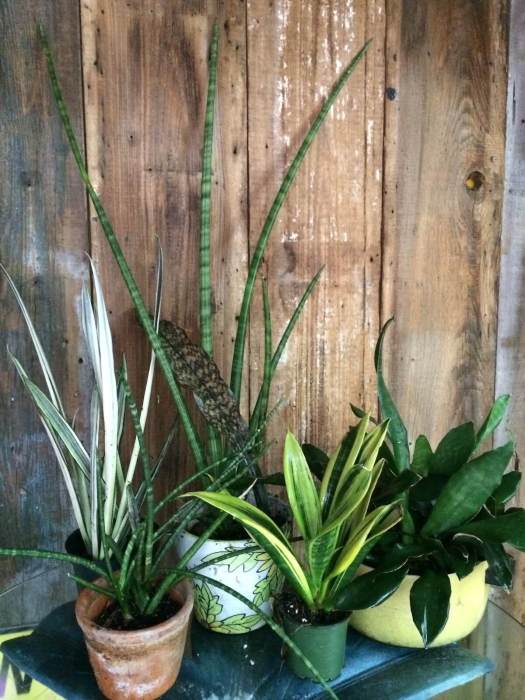
Those three plants – and the people associated with them – stand out as best examples of how young gardeners are influenced by the unexpected.
No How-to Here
Not going to get into botany and horticulture, how cacti are succulents but not all succulents are cacti, nor linger over their astonishing array of unique features and surprisingly spectacular flowers, and ease of propagation for sharing. Suffice to say all those I grow require bright light and well drained soils (sharp grit – a succulent’s roots’ dream).
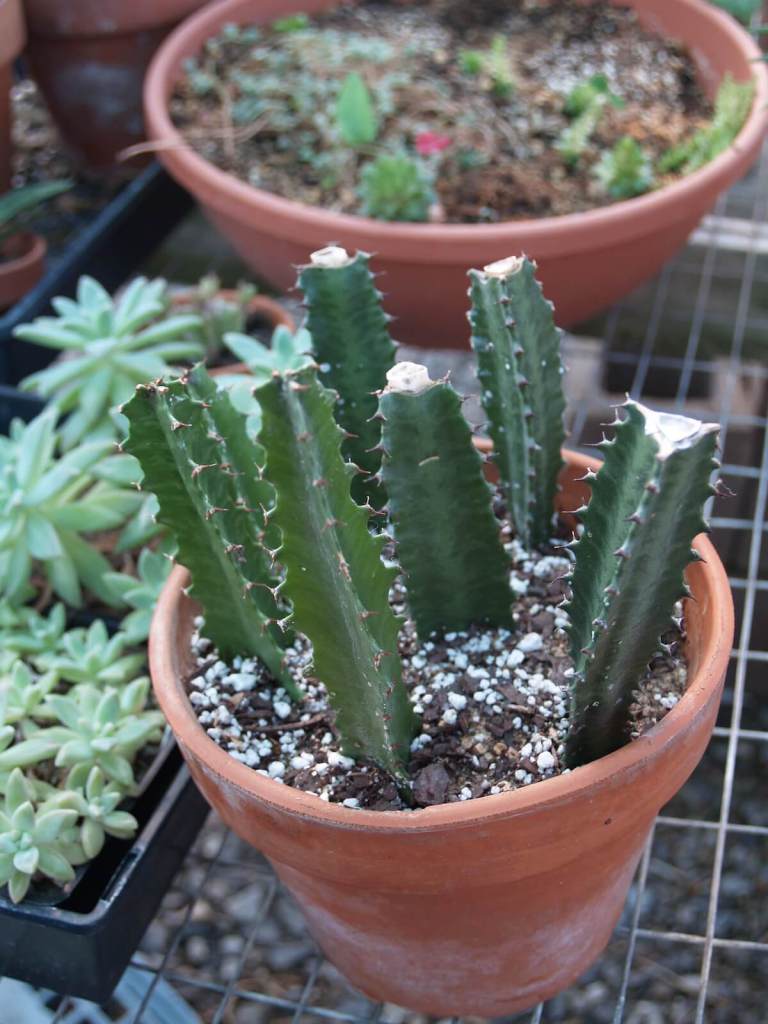
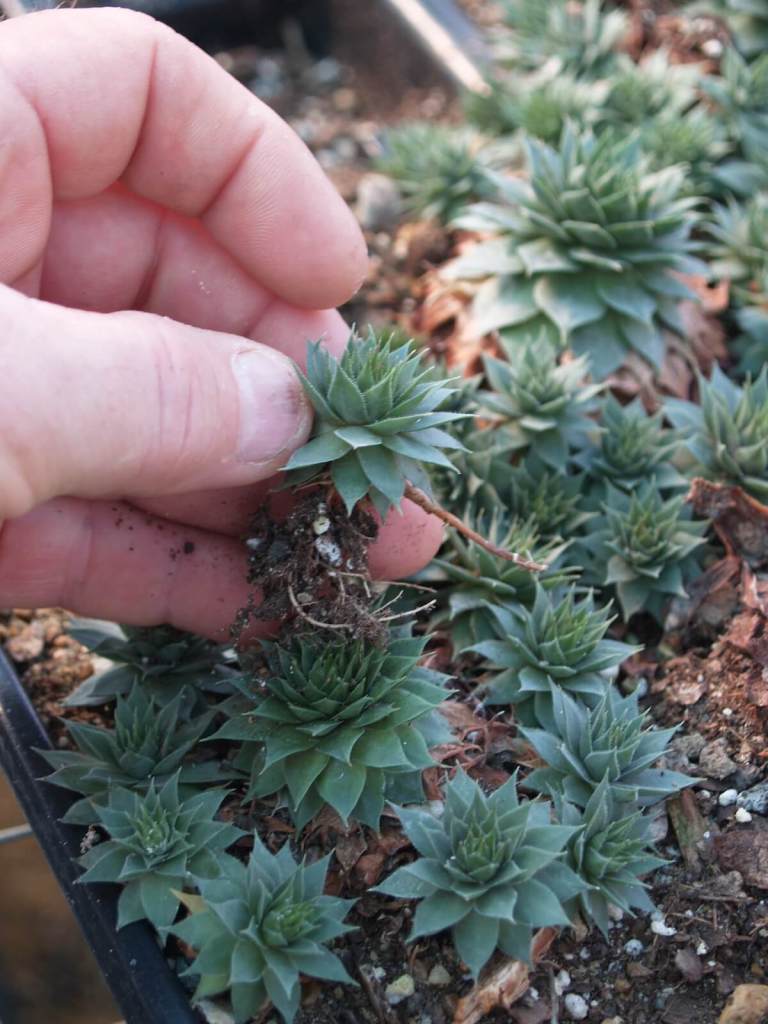

I just want to be on record that while many of these unique species are subtropical and if left out in the cold will melt into mush, a surprising number grow perfectly well outdoors, all year, even in the Gulf- and Mid-South’s heat, thick humidity, heavy rains followed by prolonged droughts, and occasional dips into single digit temperatures of my climate. With panache.
BIG CAVEAT: Garden centers often push all succulents together based just on their being succulents – imagine a pet store putting dogs, cats, and guinea pigs in the same kennels! And from looks alone it is impossible to tell tender kinds from hardy survivors – or realistic artificial ones for that matter!
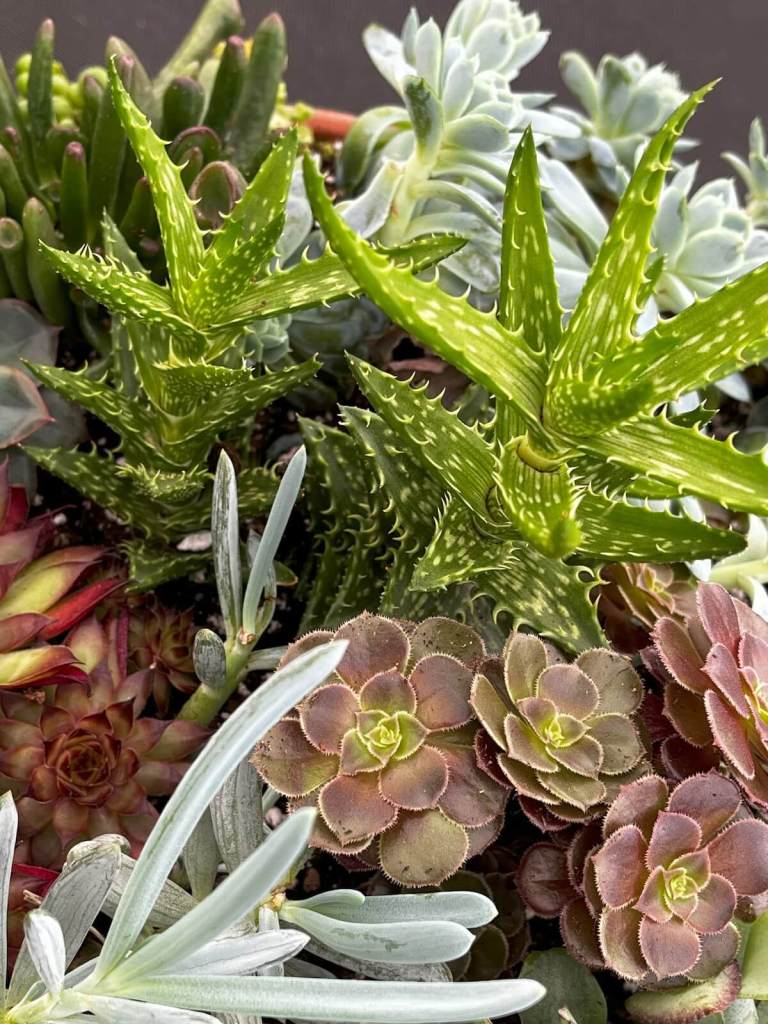


I have photographed entire collections of succulents groiwng outside all year from Oklahoma City through Memphis to Atlanta, and in Amerstram and my own garden in Lancashire, in the northwest of England.


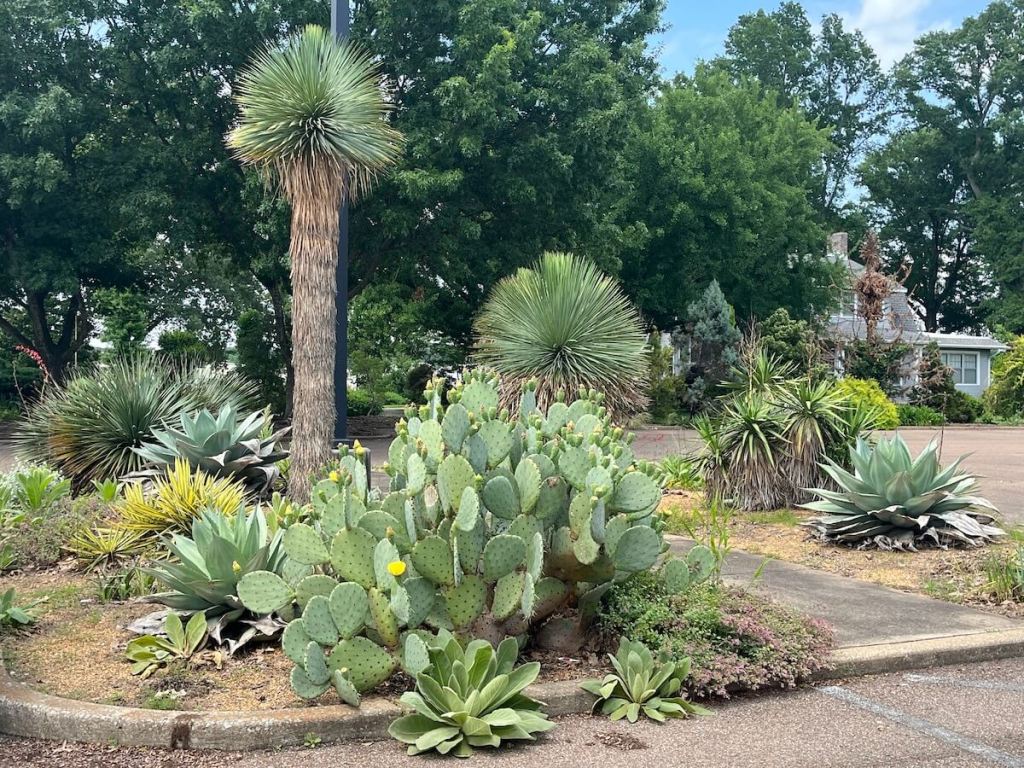


Here, then, is my personal best starter species, my Durable Dozen – not counting their many species and cultivar variations:


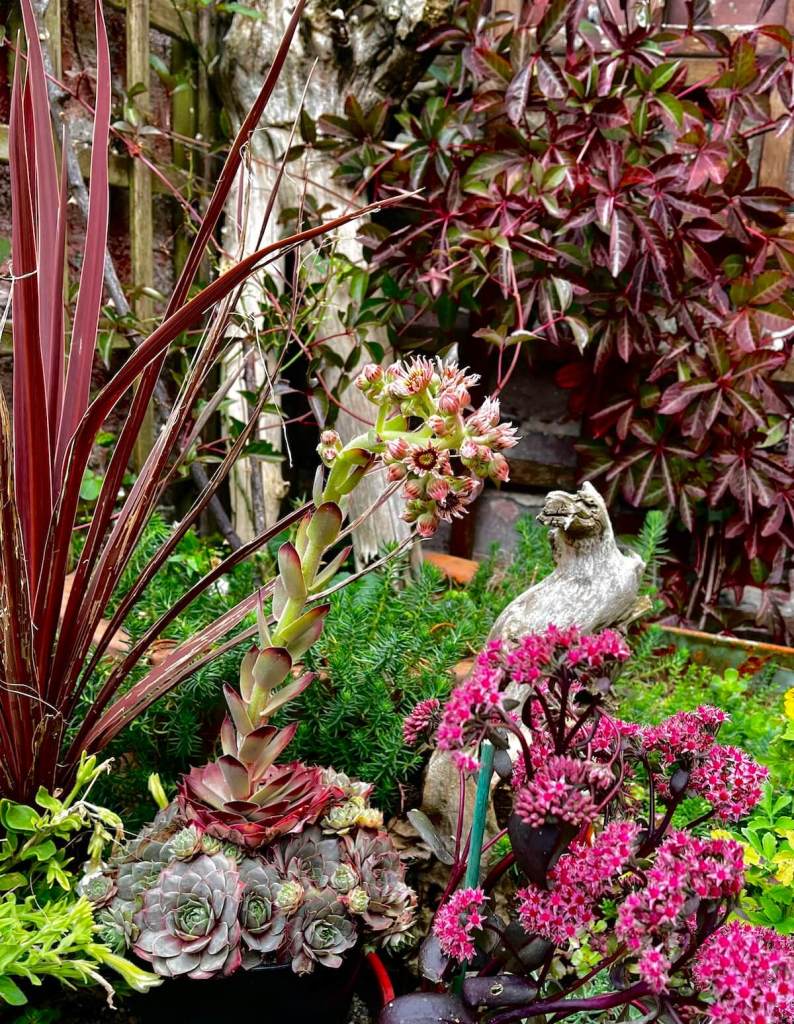


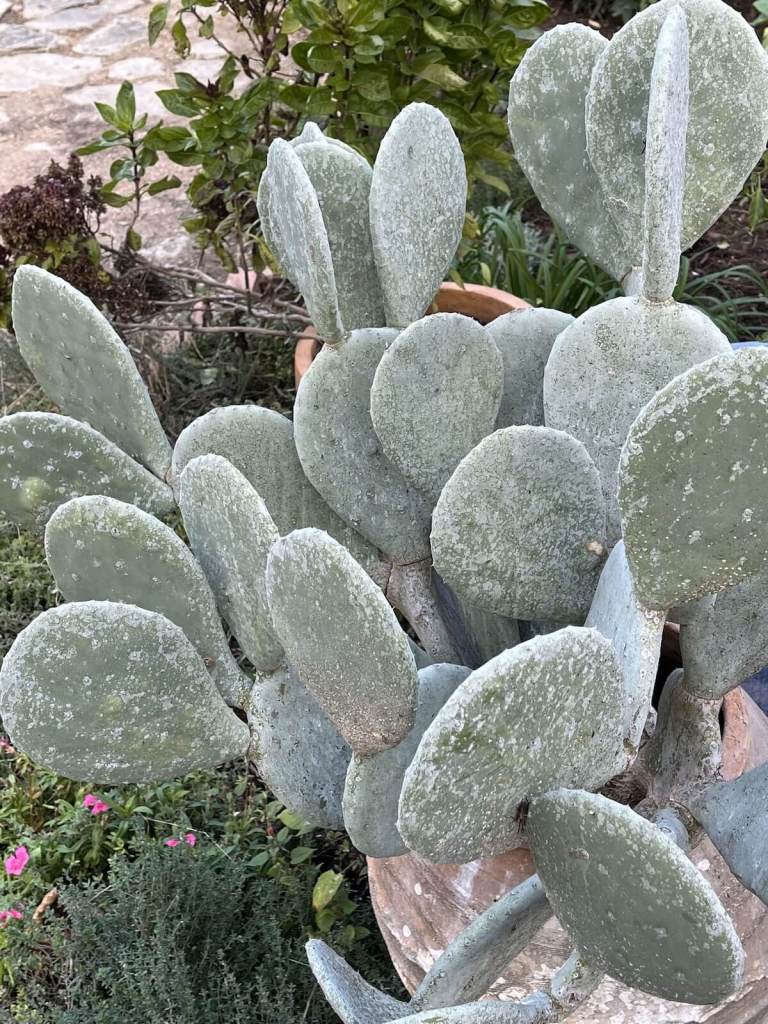
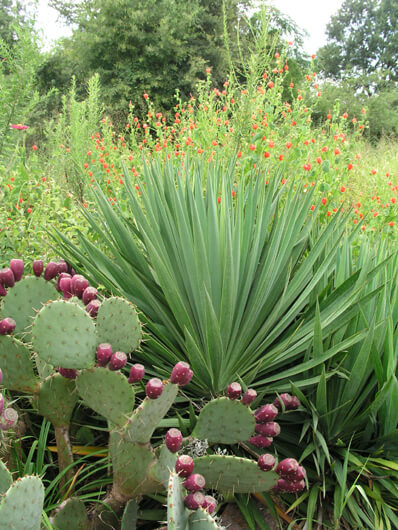
- Prickly and smooth pear cactus (Opuntia)
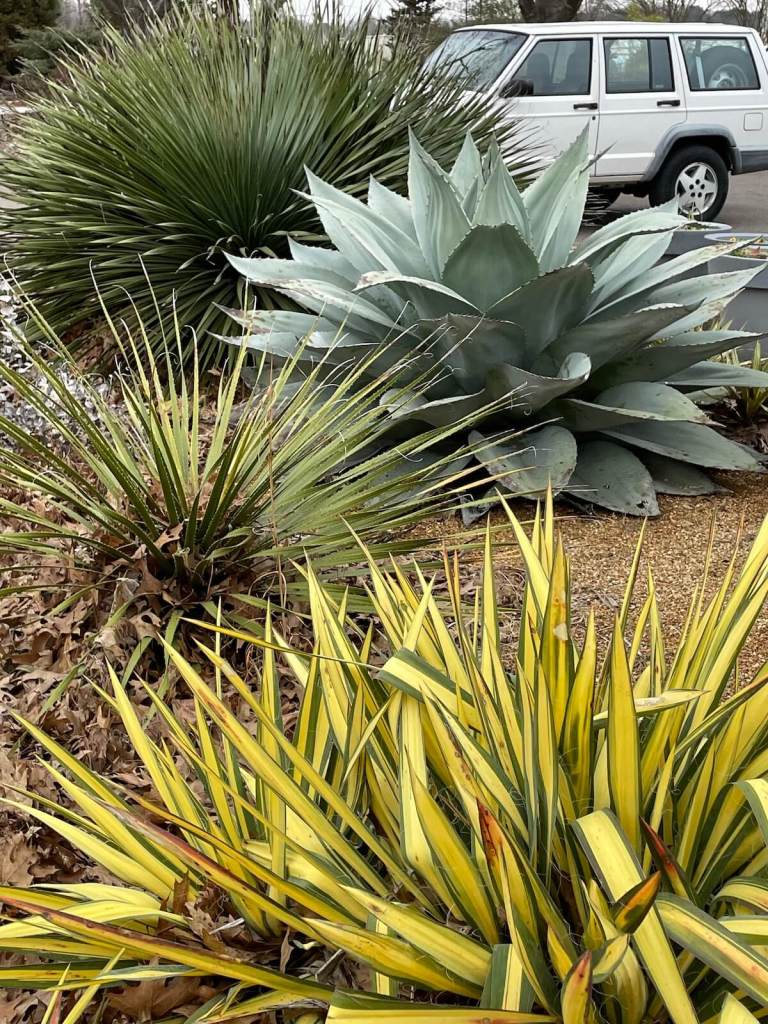
- Agaves – the large Americana and several small species (A. lopantha, A. parryi)
- Yuccas, esp. soft-tip (Y.recurvifolia) and beaked (Y.rostrata)
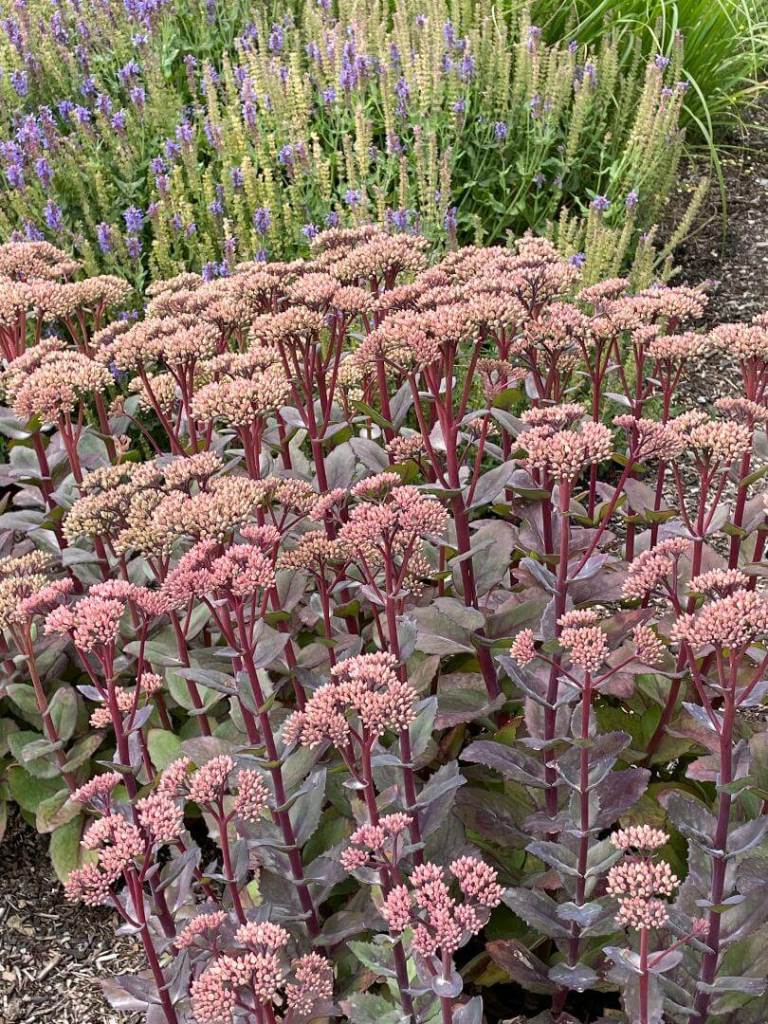
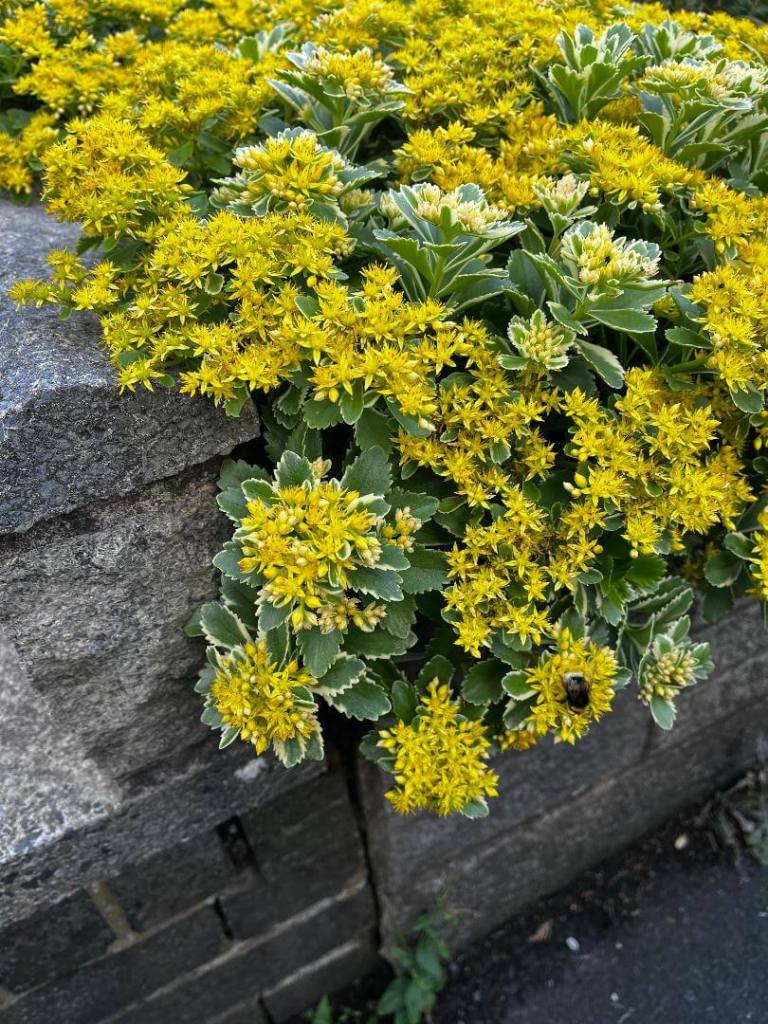
- Sedums – several upright and many cascading species
- Sempervivums (northern hens and chicks)
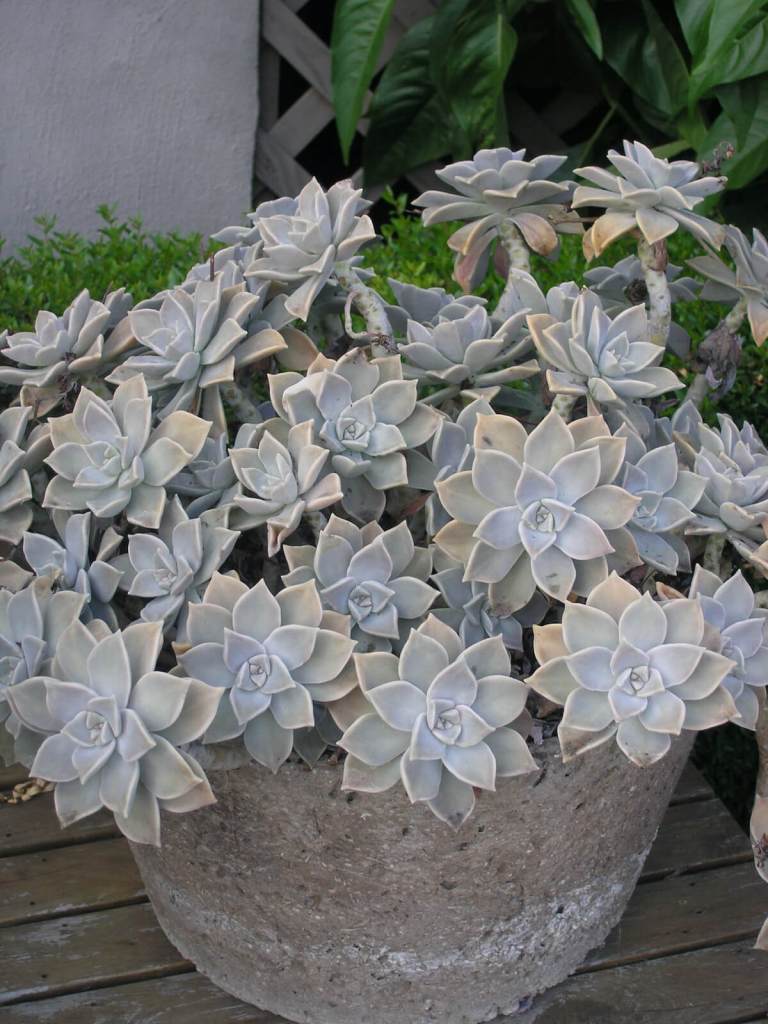
- Graptopetalum (southern hens and chicks, ghost plant)
- Hedgehog cactus (Echinocereus)
- Small barrel cactus (Ferocactus)
- Pincushion cactus (Mammilaria)
- Red yucca (Hesperaloe parviflora)
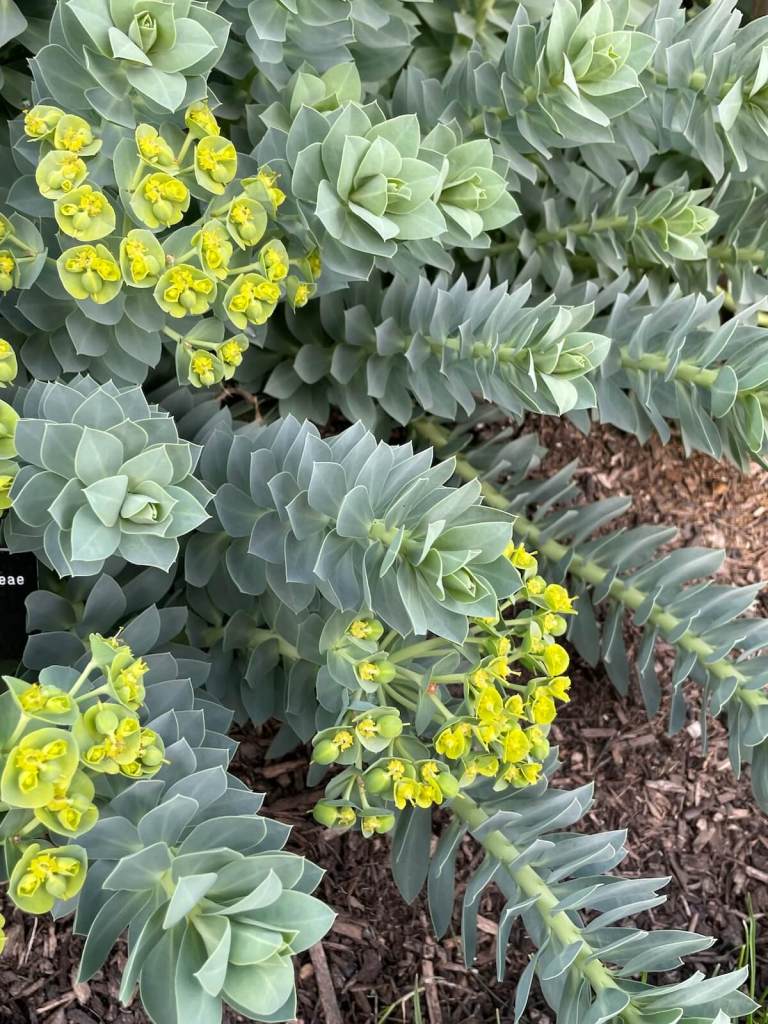
- Myrtle spurge (Euphorbia mysrinites)
- Thistle cholla – Cylindropuntia









Companion plants for hardy cacti and succulents
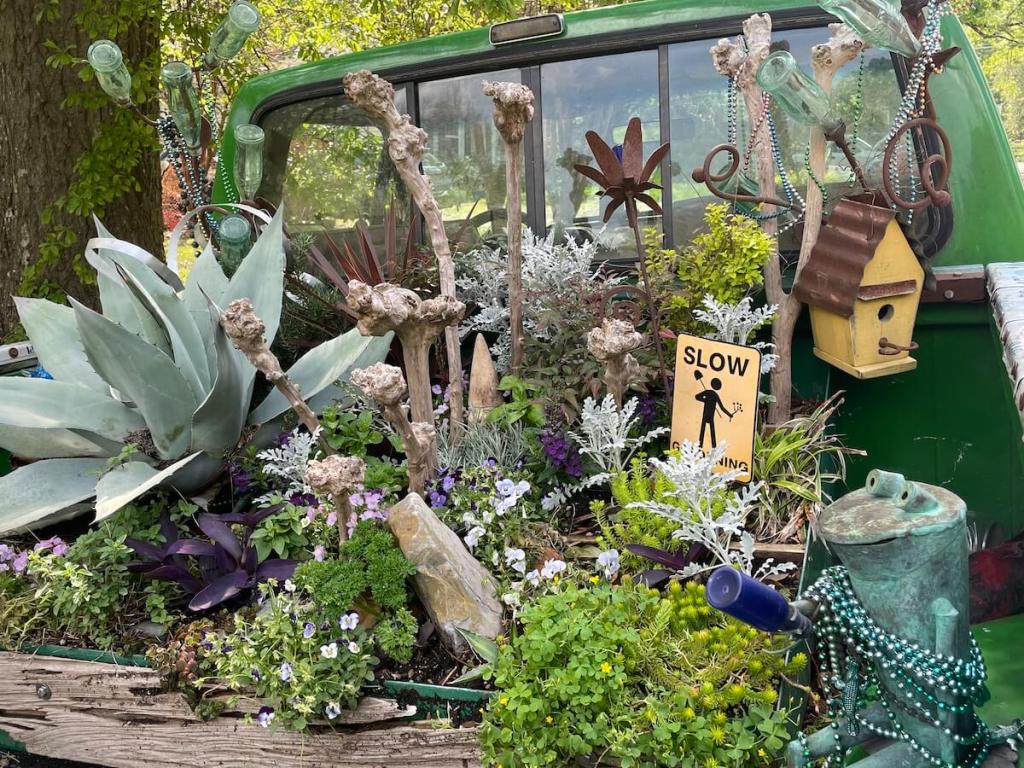
Though some succulents are unique enough as standalone specimen, I usually mix and match just like with other plants. But I can’t resist “Feldering stuff up” with accessories to help interpret and carry my little vignettes: Bits of driftwood, a few stones, an old wagon wheel, a roll of rusty barbed wire, a glass ornament, or a low water feature.
And nearly any plant that tolerates intense light and sometimes-dry conditions is suitable to grow with and accent succulents. A few common companions that come to mind include ‘Tete a Tete’ and other winter daffodils, grape hyacinth, iris, ‘Powis Castle’ Artemisia, turk’s turban (Malvaviscus), super-dwarf nandinas, purple queen Tradescantia, dwarf Mexican petunia, moss rose, Texas sage shrub, and vitex for light mid-summer shade.
Bottom Line
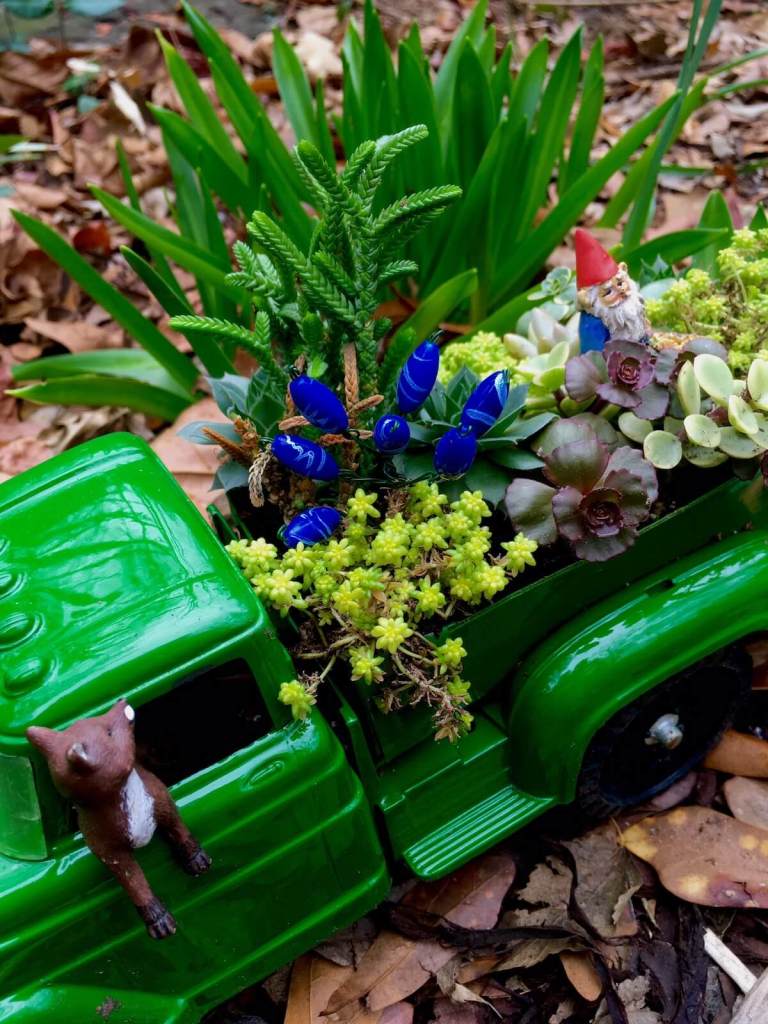
I get inspiration from garden friends who put outdoor-hardy succulents and companion plants and little accessories together in rock gardens and whimsical containers (think red wagons, seashells, cups and saucers, dishpans, miniature village scenes, old boots…). All in all, cacti and succulents provide unique looks with little effort, and add a contemporary accent to nearly any garden, indoors or out, even if just as a tabletop conversation starter.
Oh, and did I mention that my longtime partner, who started out suspicious of my obsession with these botanical misfits, has become addicted to them, even giving up ice cream money at a flower show for one of her own? And later asking me to put together a bowlful for her mother’s birthday? It’s a well-drained slippery slope, sweetheart!




 New
New 
 Felder Rushing's Blog